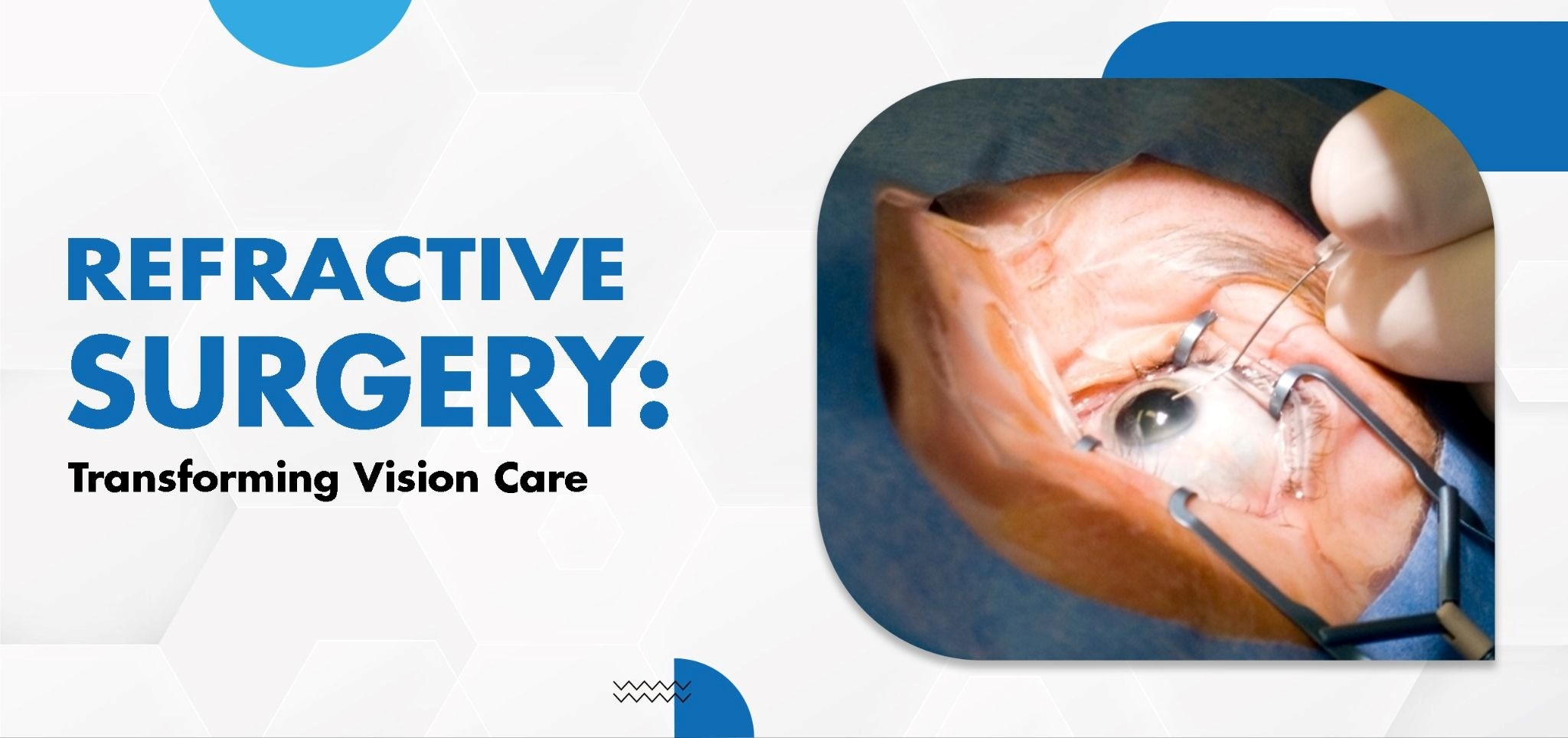
Refractive Surgery: Transforming Vision Care
Refractive surgery encompasses a group of surgical procedures aimed at correcting refractive errors in the eyes. These errors occur when the eye does not properly bend light to focus on the retina, leading to blurry vision. Refractive surgeries have revolutionized the way we treat vision problems, offering millions of people the chance to live without the dependency on glasses or contact lenses. This article explores the types of refractive surgeries, their uses, indications, contraindications, precautions, results, and other key considerations.
What is Refractive Surgery?
Refractive surgery refers to procedures that reshape or alter the cornea or lens of the eye to improve its ability to focus light on the retina. These procedures primarily address the following refractive errors:
- Myopia (Nearsightedness): Difficulty in seeing distant objects clearly.
- Hyperopia (Farsightedness): Difficulty in focusing on near objects.
- Astigmatism: Distorted or blurred vision due to an irregularly shaped cornea.
- Presbyopia: Age-related loss of near vision focus, often treated with specialized techniques.

Usage of Refractive Surgery
The primary goal of refractive surgery is to enhance vision clarity and reduce dependency on corrective eyewear. It is used to:
- Provide a long-term solution for refractive errors.
- Enhance the quality of life by allowing individuals to engage in activities without glasses or contact lenses.
- Offer an alternative for patients who experience discomfort or allergies from contact lens wear.
Types of Refractive Surgeries
The most commonly performed refractive surgeries include:
- LASIK (Laser-Assisted In Situ Keratomileusis): A procedure where a flap is created in the cornea, and the underlying tissue is reshaped using a laser.
- PRK (Photorefractive Keratectomy): Involves reshaping the cornea without creating a flap, ideal for patients with thinner corneas.
- SMILE (Small Incision Lenticule Extraction): A minimally invasive procedure that removes a small lenticule from the cornea to correct vision.
- Implantable Collamer Lens (ICL): A lens is implanted in the eye to correct high degrees of myopia or astigmatism.

Indications for Refractive Surgery
Refractive surgery is suitable for patients who meet the following criteria:
- Age: Must be over 18 years old, as refractive errors should be stable for at least one year.
- Stable Prescription: No significant changes in glasses or contact lens prescriptions for at least 12 months.
- Healthy Eyes: Absence of active eye conditions such as infections, severe dry eyes, or cataracts.
- Desire to Reduce Dependency on Eyewear: Patients seeking freedom from glasses or contact lenses for personal or professional reasons.
Contraindications of Refractive Surgery
Refractive surgery is not suitable for everyone. The following conditions are contraindications:
- Autoimmune Disorders: Conditions like rheumatoid arthritis or lupus that affect healing.
- Unstable Vision: Patients with fluctuating prescriptions are not good candidates.
- Pregnancy or Nursing: Hormonal changes during this time can affect vision stability.
- Thin or Irregular Corneas: Particularly relevant for procedures like LASIK that rely on corneal thickness.
- Severe Dry Eye Syndrome: Can worsen post-surgery and delay healing.
Precautions Before Refractive Surgery
- Comprehensive Eye Examination: A thorough evaluation of corneal thickness, pupil size, and overall eye health is critical.
- Avoid Contact Lenses: Soft lenses should be discontinued 1-2 weeks before surgery, and rigid gas-permeable lenses should be stopped for a longer period.
- Medication Review: Discuss all medications with your doctor to avoid complications.
Precautions After Refractive Surgery
- Follow Medication Protocols: Use prescribed antibiotics and anti-inflammatory eye drops to prevent infections.
- Avoid Eye Strain: Limit screen time and reading immediately after surgery.
- Protective Eyewear: Wear protective goggles or glasses to prevent accidental trauma.
- Regular Follow-Ups: Attend scheduled appointments to monitor healing progress.
Results of Refractive Surgery
Refractive surgery has a high success rate, with most patients achieving 20/40 vision or better. Specific outcomes depend on the type of surgery and the patient's initial prescription. LASIK, PRK, and SMILE typically offer comparable results, although recovery time varies.
- LASIK: Quick recovery, with many patients returning to normal activities within a day.
- PRK: Longer healing time but excellent long-term results.
- SMILE: Similar results to LASIK but with fewer dry eye symptoms.
Risks and Complications
Although refractive surgery is considered safe, potential complications include:
- Dry Eyes: Temporary or, in rare cases, persistent dry eye symptoms.
- Glare or Halos: Difficulty seeing at night, especially in low-light conditions.
- Undercorrection/Overcorrection: Some patients may need enhancement procedures.
- Infection or Delayed Healing: Rare but possible, emphasizing the need for strict postoperative care.
Technological Advances in Refractive Surgery
Modern advancements have enhanced the precision and safety of refractive surgeries. Customized wavefront technology allows for individualized treatments tailored to each patient's unique eye anatomy. Femtosecond lasers provide unparalleled accuracy, particularly for creating corneal flaps in LASIK.
Cost Considerations
The cost of refractive surgery varies depending on the procedure, the surgeon's expertise, and the location. While it may seem expensive initially, the long-term savings on glasses and contact lenses make it a cost-effective solution.
Who Should Perform Refractive Surgery?
Refractive surgery should be performed by an experienced ophthalmologist or refractive surgeon specializing in corneal procedures. Choose a surgeon with a proven track record and state-of-the-art technology.
Conclusion
Refractive surgery is a life-changing option for individuals seeking to correct their vision and reduce reliance on corrective eyewear. With multiple techniques available, it is essential to consult a qualified eye care professional to determine the most suitable procedure. By understanding the indications, contraindications, and precautions, patients can make informed decisions and achieve the best possible outcomes.